AI
Pairing with an AI is just how I work now. It hasn't replaced the thinking. It's moved where the thinking goes. This page is an honest look at how I use it, not a pitch that it's magic.
How I actually use it
Most days I'm pairing with an AI the way I'd pair with a sharp, tireless colleague. I sketch the approach out loud and hand off a lot of the building. Rather than reading every line back, I dogfood the result, putting myself in the end-user's shoes and using the thing the way someone actually would. That's usually where the real problems surface, the ones no diff would have shown me anyway. The product judgment stays mine.
On real product work I lean on AI to keep the quality bar high. I have Claude Code write the unit and end-to-end tests, and I make sure the Playwright suites cover every core workflow. Then I put the work through repeated audits, code review, security review, and design review, using both Claude Code and a second model like ChatGPT. I keep iterating until both of them come back with no critical or blocking issues. Two careful reviewers with different blind spots catch far more than I would on my own.
Where it helps, and where it doesn't
-
Genuinely great for
First drafts, unfamiliar APIs, tedious refactors, and being the rubber duck that actually answers back. It gets me to a working sketch faster than I would alone.
-
Still on me
Architecture, trade-offs, taste, and knowing when the confident answer is quietly wrong. The AI proposes. I'm the one accountable for what ships.
-
The honest bit
It hallucinates, it over-explains, and it'll happily write code I shouldn't merge. Treating its output as a draft, never a verdict, is most of the skill.
The tools I reach for
Mostly Claude Code for the day-to-day building, plus a second model like ChatGPT as an independent set of eyes when the stakes are high. This very site (the 3D experience, the visitors wandering it, these pages) was built that way: me steering, an AI doing a lot of the typing.
How a feature ships with me
The tools are new, but the process is deliberate. Here is the loop every feature goes through, whether it is a checkout flow or a walkable 3D room.
-
Frame it
I write a short brief first: the problem, who it is for, and what done looks like. That brief becomes the project's standing instructions and the spec the agent works from, and it is where most of the quality is decided.
-
Build in pairs
Claude Code types, I steer. We work in small increments, and I review each one the way a user would, in the running product, rather than only as a diff.
-
Test as we go
Unit tests with Jest and end-to-end Playwright suites for every core workflow are written alongside the feature, not bolted on afterward. A change that breaks something should fail loudly before anyone else sees it.
-
Dogfood it
I use the thing the way a customer would: on a phone, with only a keyboard, on a slow connection. This is where the real problems surface, and it is the step I refuse to skip.
-
Audit it twice
Code review, security review, and design review from Claude Code, then again from a second model with different blind spots. I keep iterating until neither reports a critical or blocking issue.
-
Ship and watch
I own the commits, the deployment, and the first-party telemetry that shows what people actually do once it is live. What I learn there feeds the next brief.
The case study shows this loop applied to a real project, start to finish.
On "AI slop"
There is a word getting thrown around right now, slop, aimed at almost anything built with AI, usually sight unseen. I understand the reflex. The web is filling up with low-effort, machine-stamped filler, and it earns the eye-roll. But the word has also become a quick way to wave off AI-assisted work wholesale, often before anyone has actually looked at it. So before you decide, look.
The 3D experience on this site was built with AI in the loop, every last piece of it. Walk through a gallery you can actually roam. Dim the whole room with the light switch by the door. Track down the hidden telescope and watch a comet cross a sky that keeps its own day and night. Chat with the people wandering the space, hunt the easter eggs tucked behind the buildings, read the hand-drawn engineering sketches on the rolling whiteboard. None of the art is a stock image. It is all drawn in code.
I don't point to any of that to boast. I point to it because every one of those choices was a human one, what to build, what to cut, when it finally felt right. The AI did a lot of the typing, but the taste and the judgment were mine. That is the part the word "slop" misses. Used with care, these tools don't replace craft, they let one person reach further than they could alone, and whether the result is any good still comes down to the person steering. Take a look, and decide for yourself.
Four more, built the same way: me steering, Claude Code typing. Every one of them is hosted at SceneXP, and you are welcome to poke at them. Click any card to step inside (each opens at scenexp.com in a new tab).
-
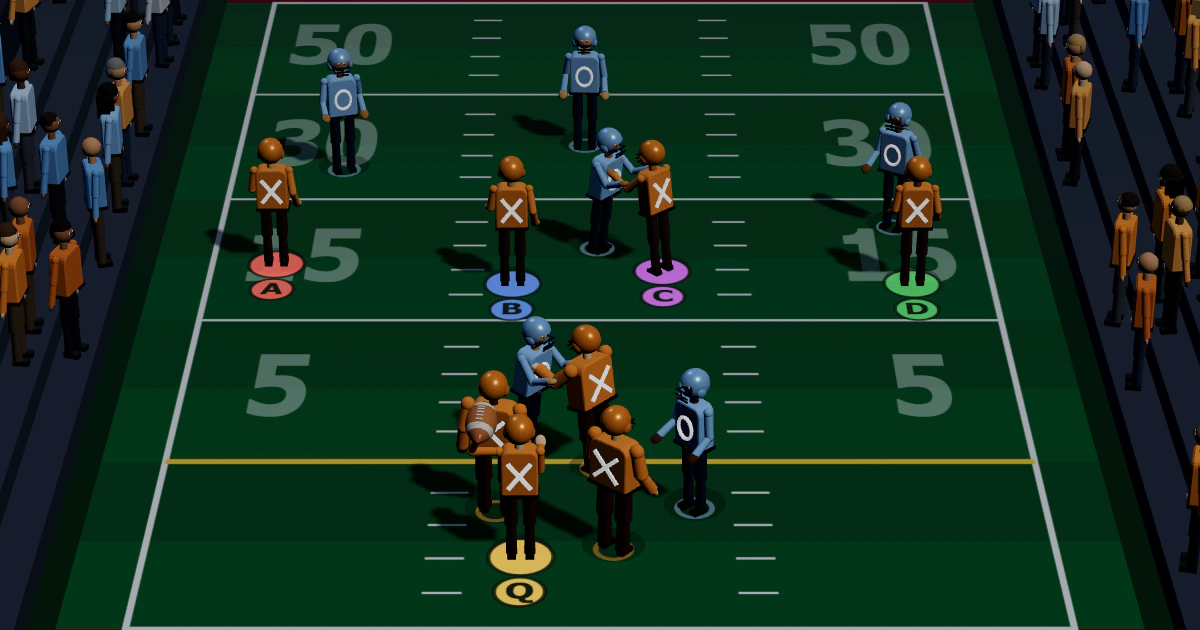
X's and O's (opens at scenexp.com in a new tab)
A football game where you call the offensive plays, then throw or run for points.
-
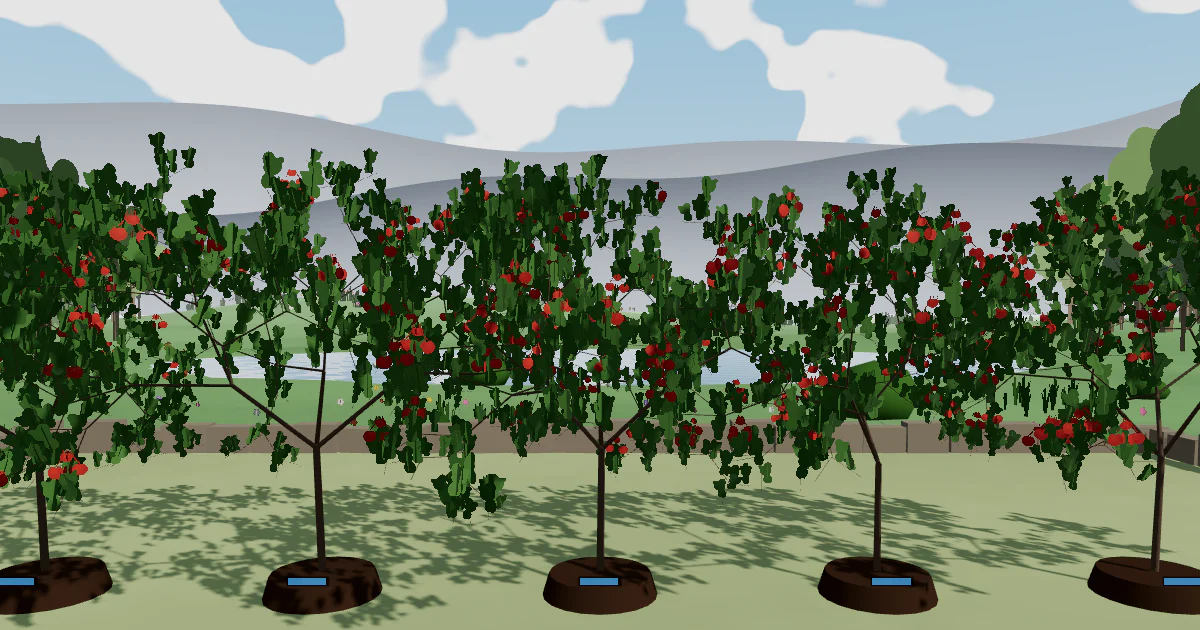
Fractal Garden (opens at scenexp.com in a new tab)
Plant and tend one-of-a-kind fractal trees and watch them change with the seasons.
-

High Water (opens at scenexp.com in a new tab)
A ninety-second water and weather study as a rising surf slowly overwhelms the shore.
-

Earth Defense (opens at scenexp.com in a new tab)
Fly an orbital ship and defend Earth from a dozen Martian raiders.
Working on something? I would love to help.
Get in touch